Seed oils: What do you actually need to know?



Seed oils have become a controversial nutrition topic, with claims online that they are “toxic,” inflammatory, or something everyone should eliminate. The research is more nuanced.
Seed oils are plant based oils extracted from seeds. Common examples include canola, soybean, sunflower, safflower, corn, grapeseed and rice bran oils.
The important distinction: the oil vs. the food
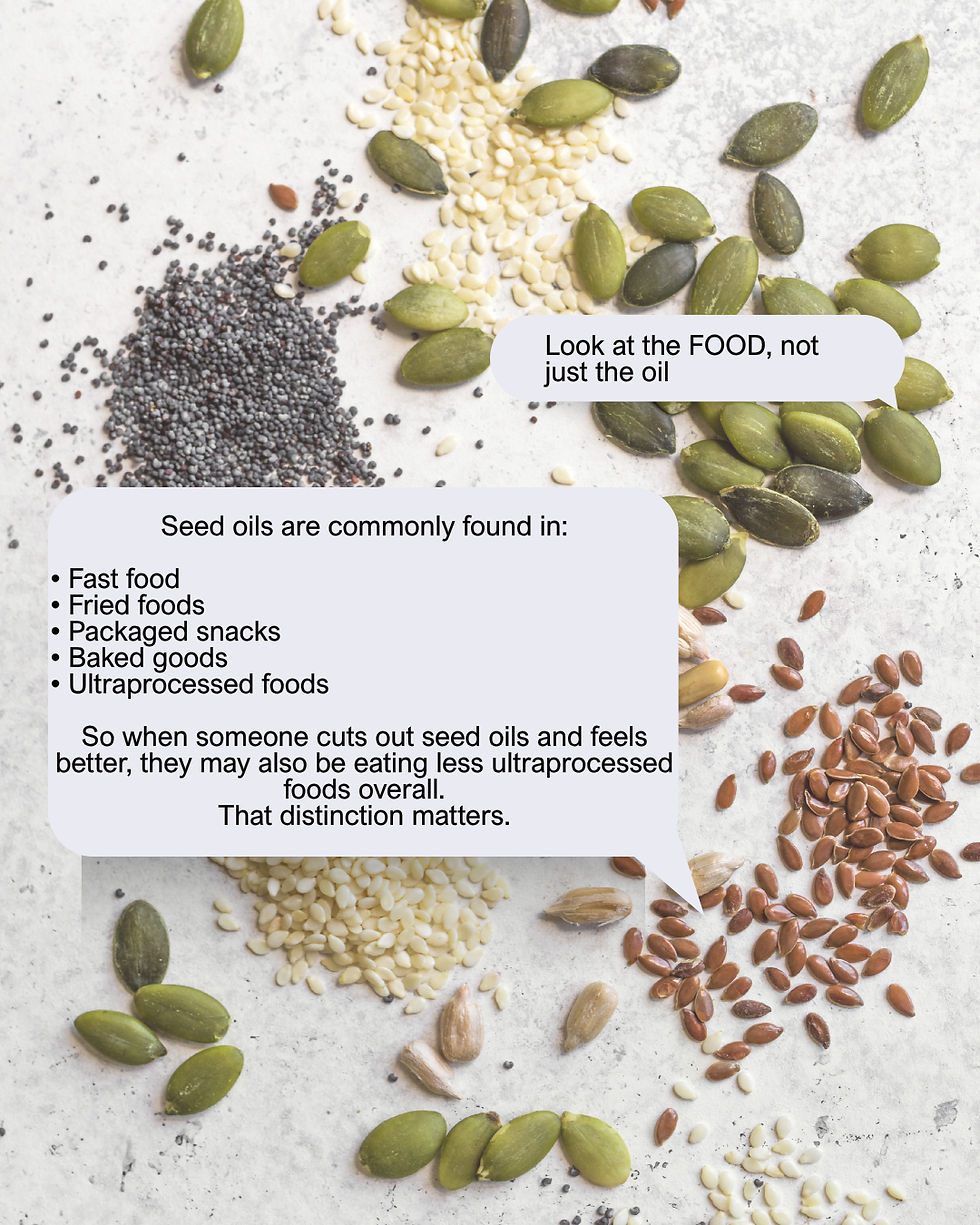
Seed oils are commonly found in ultra-processed and fried foods such as chips, packaged baked goods and fast food. These foods are associated with poorer health outcomes, but that doesn’t necessarily mean the seed oil itself is the cause. They often contain several other ingredients including refined carbohydrates, sodium and added sugars, and are easy to overconsume.
In other words, cooking vegetables, chicken or another whole food with a small amount of canola oil isn’t the same thing as regularly eating highly processed foods that happen to contain seed oils.
What about omega-6 fats?
Many seed oils contain omega-6 polyunsaturated fats. There’s a common claim that omega-6 fats automatically cause inflammation, but human research doesn’t support the idea that omega-6 fats are inherently inflammatory. Mayo Clinic’s recent review emphasizes that the overall dietary pattern and balance of fats matter more than isolating one ingredient.
Omega-6 fats are also essential fats, meaning your body needs them from your diet.
What does the research suggest?
One of the strongest points is what you’re replacing.
Replacing foods high in saturated fat, such as butter or animal fats, with oils higher in unsaturated fats can have cardiovascular and metabolic health benefits. Seed oils are generally higher in unsaturated fats and lower in saturated fat than many solid animal fats.
That doesn’t mean you need to start adding large amounts of seed oil to your diet. It simply means there’s not strong evidence that you need to be afraid of a little canola or sunflower oil in an otherwise balanced diet.
So, should you avoid seed oils?
Not necessarily.
A more useful approach is to focus on:
Eating mostly whole and minimally processed foods
Getting a variety of healthy fats
Including sources of omega-3 fats
Limiting excessive ultra-processed and fried foods
Choosing oils based on cooking method, taste, accessibility and your overall diet
Not obsessing over one ingredient in isolation
And if you enjoy cooking your vegetables with canola oil, there’s no need to feel like you’ve ruined an otherwise healthy meal.
The takeaway
Seed oils aren’t a magic health food, but they aren’t something you necessarily need to fear either. The bigger picture what you’re eating overall, how much you’re eating, and what foods the oil is coming from matters much more than simply seeing the words “canola oil” or “soybean oil” on an ingredient list.
Sources
Cleveland Clinic — “Seed Oils: Are They Actually Toxic?”
Cleveland Clinic article
Mayo Clinic — “Seed Oils: Setting the Record Straight”
Comments